Waypoint 4 of 4
Waypoint 4: Signal Over Noise at Home
The final stop brings everything home. When a storm approaches, the hardest part often isn't finding information — it's filtering it. Here we sort real signals from online noise and write a plan your whole household can follow.
Why noise grows during storms
Storms are dramatic, and drama spreads. Within minutes of a warning, social feeds fill with screenshots, satellite loops, old photos of flooding from years ago and well-meaning forwards from relatives. Some of it helps. Much of it is out of date, out of area or simply wrong. Fear and uncertainty make all of us more likely to share before we check.
The goal on this stretch isn't to stop reading the news. It's to give yourself a short routine that keeps you anchored to trustworthy sources.
The four-question rumour check
Before you act on or share a warning you've seen online, walk through four questions:
- Who issued it? Look for a named official source — a national weather service, civil protection agency or local authority.
- When? Check the date and the valid times. Recycled warnings from past storms circulate every season.
- Where? Confirm the area includes you. A red warning two regions away may not apply to your street.
- Can I find it at the source? Open the official website or verified account directly, rather than trusting the screenshot.
If you can't answer all four, don't share it. Share the official link instead.
Write your household plan
Preparedness organisations such as the Red Cross and the US government's Ready.gov campaign recommend a simple written plan. You can draft one in an evening. Cover these points:
- Alert sources: list your official weather service, local authority and the radio frequency you'll tune to.
- Safe spots: the room you'll use for wind or tornado shelter, and the higher ground or evacuation route if you live in a flood or surge zone.
- Meeting points: one near home, one further away, in case you're separated.
- Contacts: an out-of-area contact everyone can call or text, written on paper as well as saved in phones.
- Special needs: medicines, mobility aids, infant supplies and pets.
- Neighbours: who you'll check on, especially older residents living alone.
Pack a basic kit
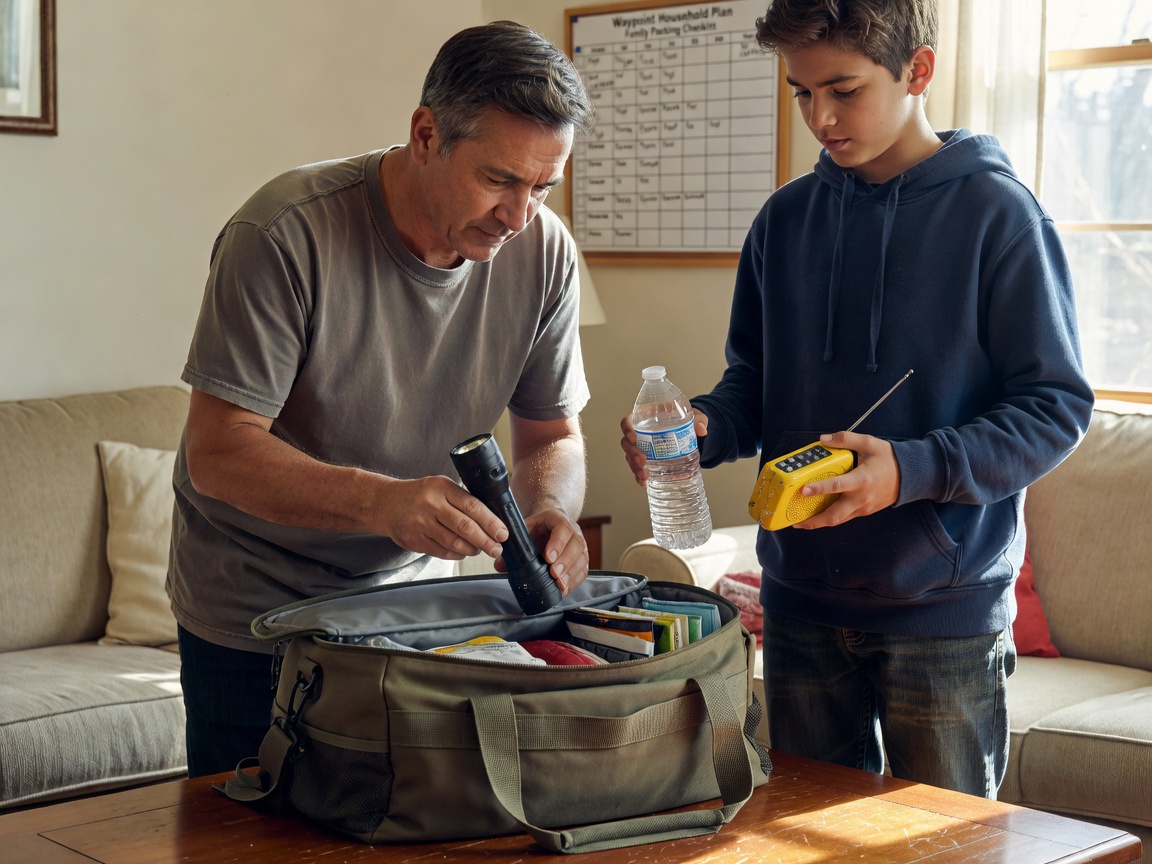
A storm kit doesn't need to be expensive. Most guidance suggests enough supplies for at least three days: drinking water, non-perishable food, a torch, a battery or hand-crank radio, spare batteries, a first-aid kit, essential medicines, phone power banks, copies of important documents and some cash. Keep it somewhere everyone knows, and check expiry dates twice a year — the changes of season are a handy reminder.
Practise, then rest easy
A plan you've never practised is just paper. Once a year, run a short drill: read a pretend warning aloud, decide together what level it is, go to your safe spot and test the radio. Ten minutes is enough. Children often remember these drills better than adults do, and they'll remind you next time.
And that's the whole route. You can read warning levels, you know how alerts reach you, you understand the numbers, and you have a plan. The weather will still surprise us — but you won't feel lost on the trail.
In an emergency, always follow official instructions and call your local emergency number if lives are at risk.